Signed in as:
filler@godaddy.com

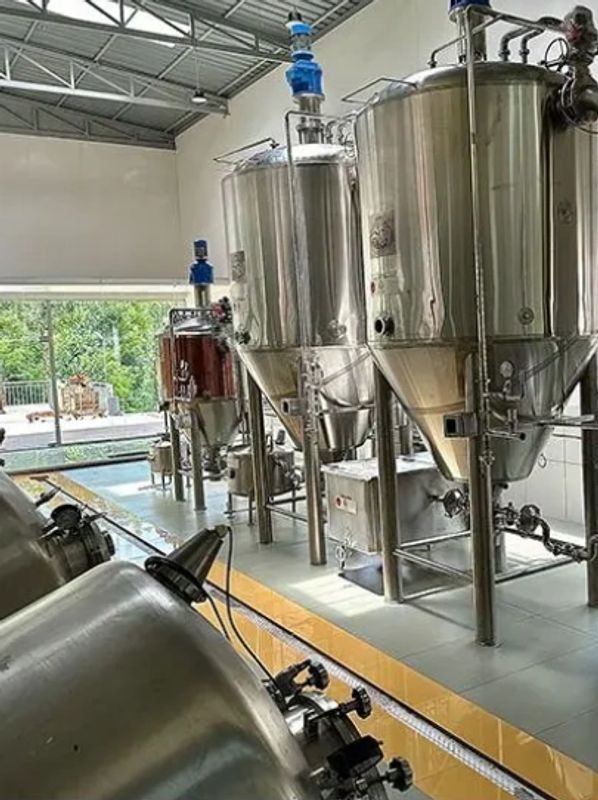
The Hindi word 'Ratnagiri' translates literally to 'Pearl Mountain', a reference to the dense silver oak canopy which crowns this farm. Ratnagiri was established in 1920 and is owned and operated by Ashok Patre, having been passed down from Grandfather, to father to son. Ashok describes the process for this lot as follows:
"This is a natural processed coffee with a 48 hour culture-assisted fermentation. It is from the catuai varietal grown on our farm at 4100 feet from the block called Godown Patte. The Brix of the coffee cherries was 23.7 when harvested and they were put in the Bio fermenters after floater removal. Lab Culture microbes and lactic acid bacteria was added to the coffee in the fermenters and allowed to ferment for 48 hours in a carbon dioxide rich environment. After removing the coffee, they were directly put on raised beds for slow drying. The coffee was then dried slowly with constant stirring over the next 29 days."
Season after season Ratnagiri estate consistently produces some of the best coffees to come out of India.
Ashok Patre is a progressive. Well-travelled and bursting with initiative, he has drawn inspiration from elsewhere to step beyond the boundaries of traditional Indian coffee cultivation and processing. Brix levels are tested before harvesting. Processing includes natural, honey and a growing number of fermentation experiments alongside the traditional washed. In recent years Ashok has invested heavily in laboratory equipment in order to scale his experiments with precision. Such techniques include anaerobic fermentation, carbonic maceration and innoculation with lab-grown yeasts and bacterial cultures.
For all intents and purposes Ratnagiri Estate is a biodynamic farm and also maintains official Rainforest Alliance Certification. Quarterly soil tests and organic corrections to soil are applied. Ionic seawater and sea weed extract are applied to improve plant immunity and sugar levels of the fruit.
The estate is a lush shaded environment with 3 stories of shade. It is home to over 48 recorded bird species, monkeys, leopards, wild boar, tigers, mongoose and - on occasion - elephants. The rich biodiversity demands that Ashok and his family have an approach to farming which places ecology and harmony with the environment at the forefront. This is a world class farm, truly one of the leading in India and a great example of Olam and the farmer working together to engineer excellence.

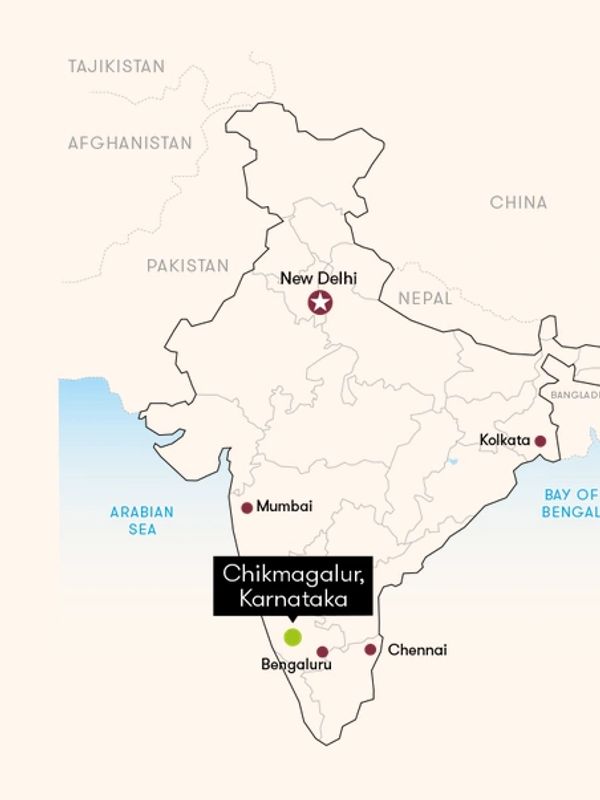
If coffee was born in Ethiopia and grew up in Yemen, then it left home to make its own way in the world through India in the 17th Century, when Baba Budan, returning from a pilgrimage to Mecca, smuggled seven beans and planted them in the hills of the Chikkamagaluru district, a hill region now known as Baba Budan Giri. Green coffee cultivation grew slowly in India and the first formal plantations were established by the British in 1840 in the same region where the first coffee was planted.
Over the years, repeated battles with leaf rust and an emphasis on yield caused India to increase planting Robusta and prioritize shade growing conditions. Today, India grows more than twice as much Robusta as Arabica and nearly all coffee is grown under shade, much of it in forest conditions. Over 21% of India’s coffee is exported to Italy, where Robusta has long been a part of traditional espresso blends. In recent years, India has been drawing increased attention from speciality markets. Coffee plantations in India are home to abundant wildlife, including tigers and elephants, because of the forest-like conditions. Compared to shade grown coffee in other parts of the world, coffee in India is grown in dense shade conditions, and almost intercropped with peppercorn, cardamom, areca nut, oranges, bananas, and other crops.
Every once and a while a coffee comes along that makes you really sit up and take notice!!!!!
This coffee is an exceptional Microlot from the Ratnagiri Estate, which is nestled in the foothills of the western Ghats.
Exhibiting intense floral notes of rose, followed by orange, cloves, berries, a syrupy complexity & chocolate.
This coffee is a real stand out.